Southern trees bear a strange fruit
Abel Meeropol, “Strange Fruit,” 1939
Blood on the leaves and blood at the root
Black bodies swingin’ in the Southern breeze
Strange fruit hangin’ from the poplar trees
Pastoral scene of the gallant South
The bulgin’ eyes and the twisted mouth
Scent of magnolias sweet and fresh
Then the sudden smell of burnin’ flesh
Here is a fruit for the crows to pluck
For the rain to gather, for the wind to suck
For the sun to rot, for the tree to drop
Here is a strange and bitter crop
I’m proud to have lived a life that has given me a reputation as a kind and caring person. This is not a kind or caring post. It’s the first in a series of posts that will be neither kind nor caring. Welcome to a series of posts about lynching.
In 1939, songwriter Abel Meeropol wrote the poem Strange Fruit, printed above – a haunting poem made even more famous by Billie Holiday’s musical version. Take a minute to absorb her version: a powerful interpretation of an already powerful poem. And keep it in mind as you read on.
What is Billie Holiday’s song, and Abel Meeropol’s poem that inspired it, about? Lynching – an illegal ceremonial public execution conducted by a group of people with the goal of intimidating others into compliance. The “strange fruit” is a human being hanging from a tree.
What makes the poem so powerful is that it describes the horrific aftermath of a horrific crime. Black bodies swinging in the southern breeze, blood on the leaves, bulging eyes and twisted mouth. Hanging was by far the most common method of lynching – but as we will see in future posts, far from the only method.
A lynching was not just a murder – it was an organized system of terror. There are examples from all over the world and throughout all time, but what we will focus on here is lynching as practiced in the southern United States. The perpetrators were almost always white. The victims were almost always black – but not exclusively, as we will see in future posts. The victims were men, women, and even children. The perpetrators were men, women, and even children.
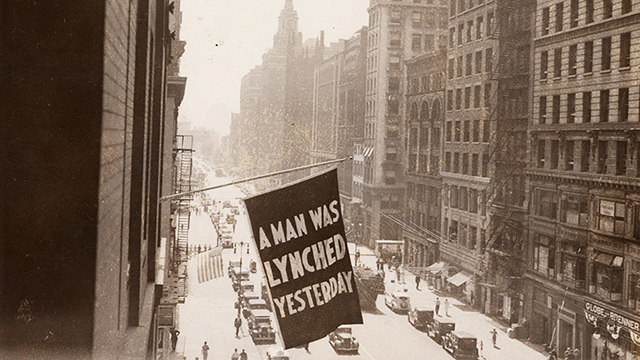
Following emancipation, formerly enslaved people gained legal freedom, citizenship, and, at least briefly, political power. For many white Southerners who had built their identity and social position on slavery, these changes represented a direct challenge to the racial hierarchy that had governed Southern life for generations. Violence became one of the tools used to restore that hierarchy.
Lynchings frequently occurred when Black individuals challenged social norms, achieved economic success, attempted to vote, competed with white businesses, or were perceived as threatening the racial order in some way. The specific accusation often mattered less than the message being sent. That message was directed not at the victim (who was, after all, now dead) but at the entire community: keep quiet, or you’re next.
Between the end of the Civil War and the mid-1960s, thousands of people were victims of lynching. The exact number is hard to pinpoint because not every lynching was reported, and because of varying definitions of what constitutes a lynching. The best-known count comes from Tuskegee University, which identified 4,743 victims. You can explore the history for yourself from the American Lynching dataset, or from this excellent mapping tool from Monroe Work Today.
And I wouldn’t be me if I weren’t willing to dig in to the data.
But that’s not what matters now. What matters now is historical fact and the stories that go along with it. So here is a question to think about for the next post in this series:
What’s worse than being burned at the stake?
Other posts in this series:
Strange Fruit
Worse Than Burning