Ungerrymandering New Mexico

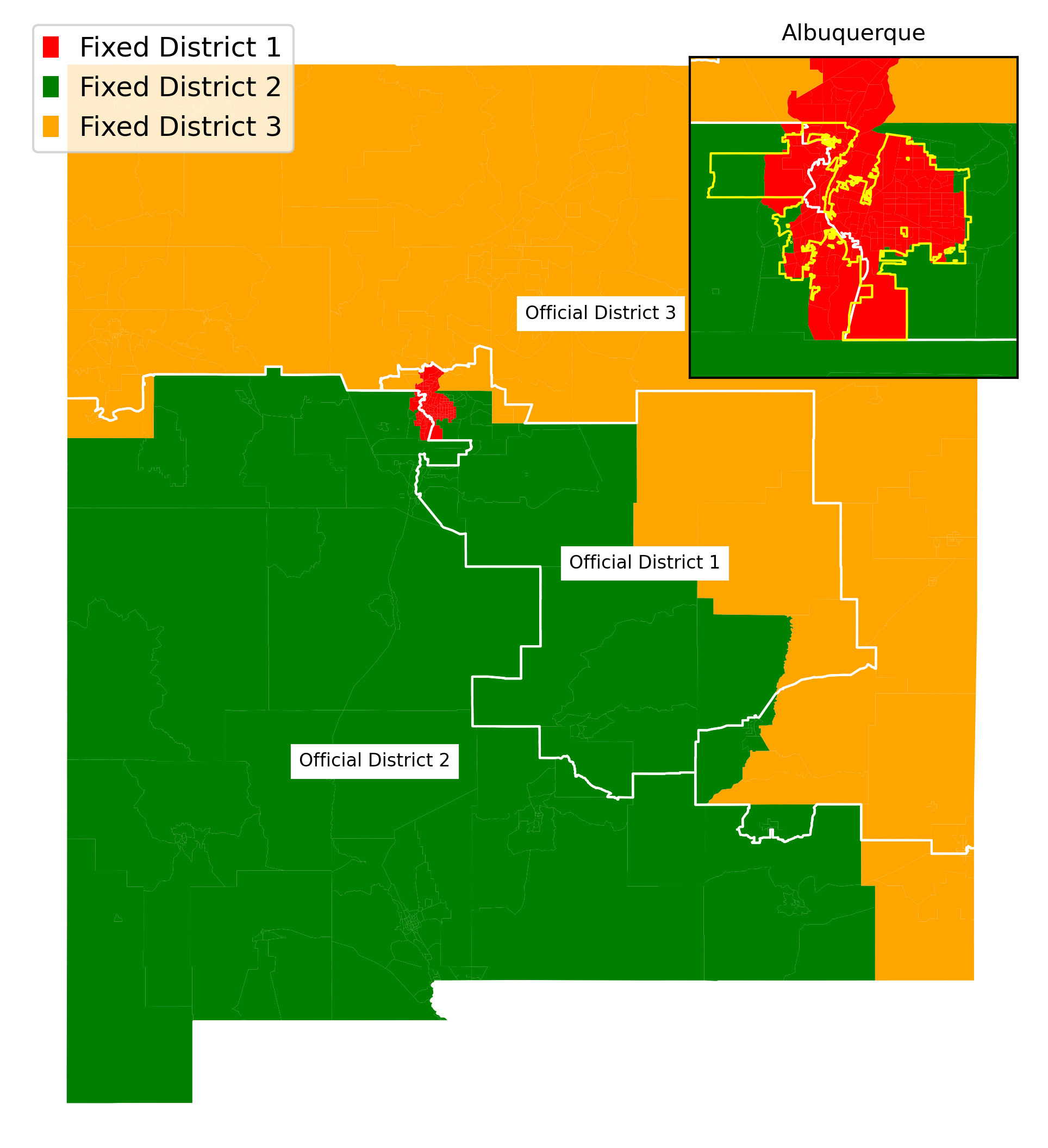
The other state with three Congressional districts is New Mexico. The map is below. My attempt at fair districts are show by colors: District 1 is red, District 2 is green, and District 3 is orange. The borders between The inset at the top right shows the city of Albuquerue, home to 26 percent of New Mexicans. The borders of the city of Albuquerque are shown in yellow.

Suggested new Congressional Districts for Nebraska

Look at the borders of the city of Albuquerque. My attempting-to-be-fair districts keep all of Albuquerque in District 1. The actual congressional districts in New Mexico divide Albuquerque down the middle between District 1 and District 2. Yes, we’ll see that again and again and again as we move to bigger and bigger states.

Previous ungerrymanders:
Introduction
Idaho
Montana
Rhode Island
West Virginia
New Hampshire (and again)
Maine
Hawaii
Nebraska

The badass anthem: Kassaman in Kansas

The World Cup of Men’s Soccerfootball, currently going on in the United States and Canada and Mexico, has given us so many great stories. One of the most fun has been the bond between the Algerian men’s national team and the citizens of Lawrence, Kansas, where their training base is. Lawrence is a college town, home to University of Kansas. It’s a dot of progressivism in an extremely conservative state, and therefore welcoming to all. The welcome has gone so far that the University of Kansas marching band learned the Algerian national anthem and played it at the team’s training session:

And what a national anthem it is!

The best introduction to the world’s most badass national anthem is just to hear it and see the lyrics in real time. Watch this video, and make sure to stay until 27 seconds in, when the lyrics start:

And here are those lyrics, side by side, in both transliterated Arabic (written in Latin letters) and in English translation:

Qasaman bi-n-nazilati l-mahiqat
Wa-d-dima’i z-zakiyati t-tahirat
Qasaman bi-n-nazilati l-mahiqat
Wa-d-dima’i z-zakiyati t-tahirat
Wa-l-bunudi l-lami’ati l-khafiqat
Fi-l-jibali sh-shamikhati sh-shahiqat
Nahnu thurna fa-hayatun ‘aw mamat
Wa-‘aqadna al-‘azma ‘an tahya l-Jaza’ir
Fa-shhadu! Fa-shhadu! Fa-shhadu!

We swear by the lightning that destroys,
By the streams of generous blood being shed,
We swear by the lightning that destroys,
By the streams of generous blood being shed,
By the bright flags that wave,
Flying proudly on the high mountains
That we are in revolt, whether to live or to die,
We are determined that Algeria should live,
Bear witness! Bear witness! Bear witness!

The story of its creation is even more badass. Moufdi Zakaria, the independence hero of Algeria (in the same way that George Washington is the independence hero of the United States), wrote the lyrics in his own blood on the walls of the French Serkaji-Barberousse Prison in Algeirs, where he was being tortured.

So, watch the Algeria vs Argentina game tonight at 9 PM ET — but be sure to tune in at 8:55 PM ET to hear the world’s most badass national anthem.

Bonus content: As with most national anthems, people usually sing only the first verse. But the lyrics to the third verse are worth reading as a diss track to colonial overlords France:

Ya Firansa, qad mada waqtu l-‘itab
Wa-tawaynahu kama yutwa l-kitab
Ya Firansa, qad mada waqtu l-‘itab
Wa-tawaynahu kama yutwa l-kitab
Ya Firansa ‘inna dha yawmu l-hisab
Fa-sta’iddi wa-khudhi minna l-jawab
‘Inna fi thawratina faslu l-khitab
Wa-‘aqadna al-‘azma ‘an tahya l-Jaza’ir
Fa-shhadu! Fa-shhadu! Fa-shhadu!

O France, the time of reproof is over
And we have closed it as a book is closed;
O France, the time of reproof is over
And we have closed it as a book is closed;
O France, this is the day of reckoning
So prepare to receive from us our answer!
In our revolution is the end of empty talk;
We are determined that Algeria should live,
Bear witness! Bear witness! Bear witness!

Strange Fruit

Southern trees bear a strange fruit
Blood on the leaves and blood at the root
Black bodies swingin’ in the Southern breeze
Strange fruit hangin’ from the poplar trees

Pastoral scene of the gallant South
The bulgin’ eyes and the twisted mouth
Scent of magnolias sweet and fresh
Then the sudden smell of burnin’ flesh

Here is a fruit for the crows to pluck
For the rain to gather, for the wind to suck
For the sun to rot, for the tree to drop
Here is a strange and bitter crop

Abel Meeropol, “Strange Fruit,” 1939

I’m proud to have lived a life that has given me a reputation as a kind and caring person. This is not a kind or caring post. It’s the first in a series of posts that will be neither kind nor caring. Welcome to a series of posts about lynching.

In 1939, songwriter Abel Meeropol wrote the poem Strange Fruit, printed above – a haunting poem made even more famous by Billie Holiday’s musical version. Take a minute to absorb her version: a powerful interpretation of an already powerful poem. And keep it in mind as you read on.

What is Billie Holiday’s song, and Abel Meeropol’s poem that inspired it, about? Lynching – an illegal ceremonial public execution conducted by a group of people with the goal of intimidating others into compliance. The “strange fruit” is a human being hanging from a tree.

What makes the poem so powerful is that it describes the horrific aftermath of a horrific crime. Black bodies swinging in the southern breeze, blood on the leaves, bulging eyes and twisted mouth. Hanging was by far the most common method of lynching – but as we will see in future posts, far from the only method.

A lynching was not just a murder – it was an organized system of terror. There are examples from all over the world and throughout all time, but what we will focus on here is lynching as practiced in the southern United States. The perpetrators were almost always white. The victims were almost always black – but not exclusively, as we will see in future posts. The victims were men, women, and even children. The perpetrators were men, women, and even children.

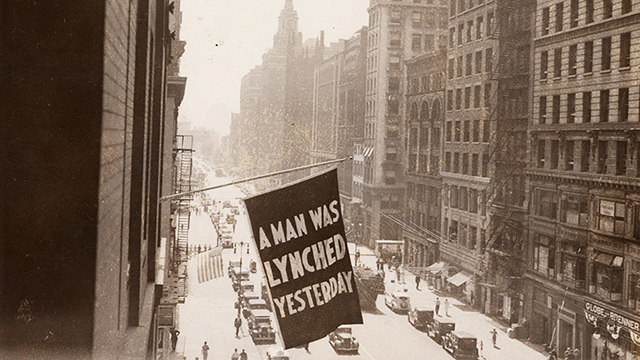
A flag flying outside a building. The flag says "A man was lynched yesterday"
The flag flown outside NAACP headquarters on Fifth Avenue in Manhattan after lynchings between 1936 and 1938

Following emancipation, formerly enslaved people gained legal freedom, citizenship, and, at least briefly, political power. For many white Southerners who had built their identity and social position on slavery, these changes represented a direct challenge to the racial hierarchy that had governed Southern life for generations. Violence became one of the tools used to restore that hierarchy.

Lynchings frequently occurred when Black individuals challenged social norms, achieved economic success, attempted to vote, competed with white businesses, or were perceived as threatening the racial order in some way. The specific accusation often mattered less than the message being sent. That message was directed not at the victim (who was, after all, now dead) but at the entire community: keep quiet, or you’re next.

Between the end of the Civil War and the mid-1960s, thousands of people were victims of lynching. The exact number is hard to pinpoint because not every lynching was reported, and because of varying definitions of what constitutes a lynching. The best-known count comes from Tuskegee University, which identified 4,743 victims. You can explore the history for yourself from the American Lynching dataset, or from this excellent mapping tool from Monroe Work Today.

And I wouldn’t be me if I weren’t willing to dig in to the data.

But that’s not what matters now. What matters now is historical fact and the stories that go along with it. So here is a question to think about for the next post in this series:

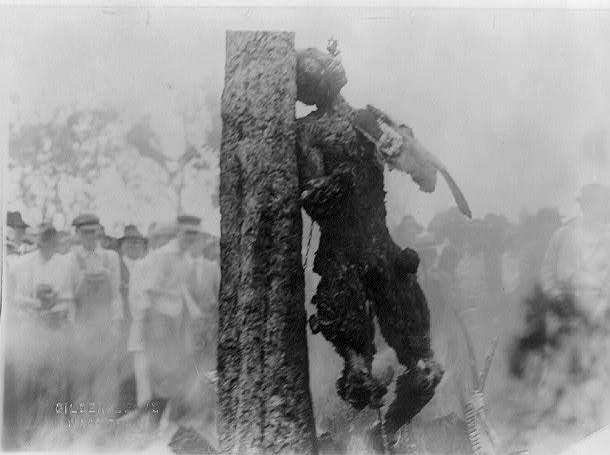
What’s worse than being burned at the stake?

Ungerrymandering Nebraska

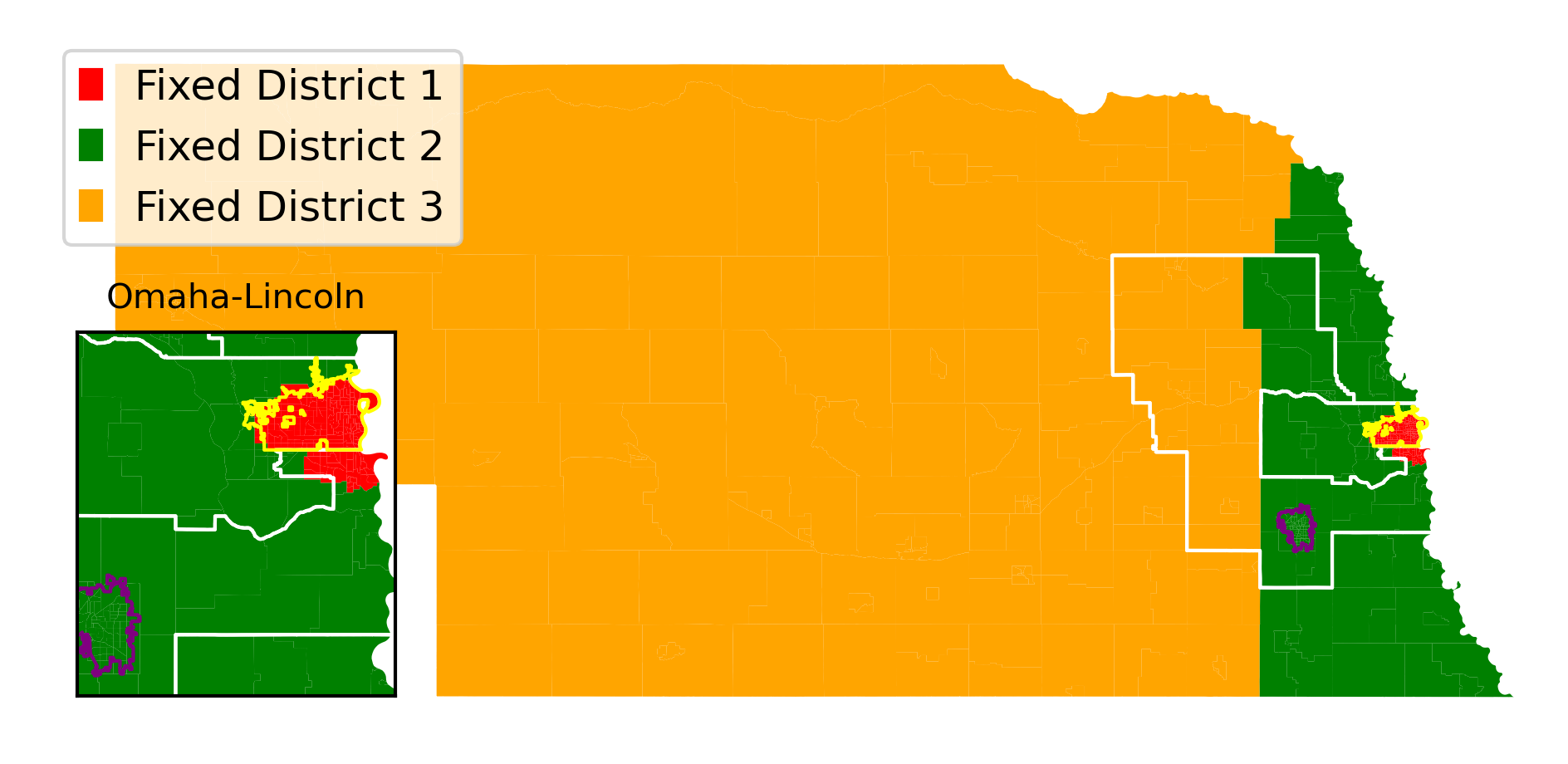
The more Congressional districts a state has, the more fun the state is to gerrymander. And so we arrive at the first state with three districts: Nebraska. A third district requires a third color code – District 1 is red, District 2 is green, and District 3 is orange.

Suggested new Congressional Districts for Nebraska

Remember that, as always, I made these districts in an attempt to fairly represent the population of Nebraska, with no consideration of voting patterns. I started in the largest city (Omaha) and moved out. District 1 is the most urban (Omaha-en) and District 3 is the most rural.

The inset at the bottom left shows the two largest urban areas in Nebraska: Omaha and Lincoln, collectively holding 40 percent of the population of Nebraska. Notice how the boundaries of Omaha (yellow border) line up with District 1 in both my new districts (red color) and the actual Nebraska congressional districts (white borders).

That is the exception. As we go through states, we’ll see urban areas split among districts over and over again. It’s nice to see it not happen for once.

Previous ungerrymanders:
Introduction
Idaho
Montana
Rhode Island
West Virginia
New Hampshire (and again)
Maine
Hawaii

Ungerrymandering Hawaii

Continuing to fix each state’s Congressional Districts, we arrive at the last state with two Representatives: Hawaii.

Suggested new Congressional Districts for Hawaii

The fair districts that I designed (District 1 in red, District 2 in green) line up fairly well with the official districts (labeled and divided by a white line). My District 1 includes the coastal cities of Kailua and Kaneohe instead of the center-island cities of Miliani and Wahaiwa. Remember that I drew these districts with no reference to official districts, so it’s not a surprise that mine are a little different.

Hawaii was also a particularly interesting state to map. Here is what the map looked like straight out of the box:

I had to crop out all the uninhabited islands, zoom in on the inhabited ones, fix all the coastlines (like I did with Florida) and add an inset for Oahu so you could see District 1 clearly. Here is part of the Python script to generate the inset map:

It was fun.

Thirteen states down, thirty-seven to go. Up next: the first of two states with three Representatives. The more representatives a state has, the more fun it is to ungerrymander!

Previous entries:
Introduction
Idaho
Montana
Rhode Island
West Virginia
New Hampshire (and again)
Maine